Why Glovo’s Lagos Summit Proves Digital Commerce in Nigeria is Entering an AI-Driven Phase
How is AI solving the unit economics of digital commerce in Nigeria?
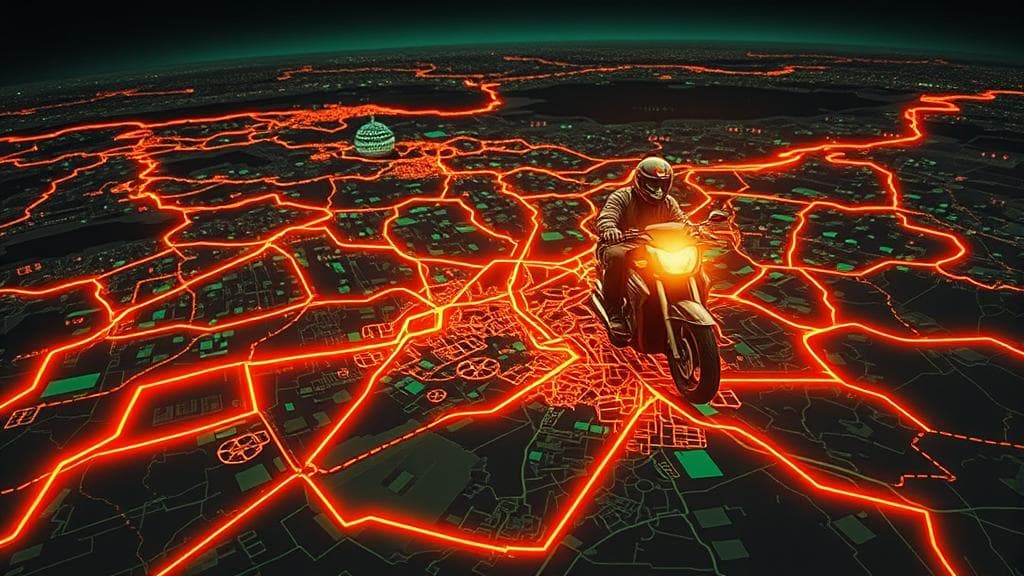
The removal of the fuel subsidy in Nigeria has fundamentally broken traditional delivery margins. With fuel prices soaring by over 400% in the last two years, manual dispatching is dead on arrival. Every extra kilometer a dispatch rider travels unnecessarily eats directly into the razor-thin margins of merchants and platforms. This is where AI-driven route optimization and batching algorithms become survival tools. Instead of a rider making a single delivery per trip, machine learning models must dynamically batch orders from multiple vendors in the same hub—like Yaba or Ikeja—to customers along the same path. Glovo’s platform relies heavily on these automated dispatch systems to keep delivery fees affordable for the average Lagosian. For West African developers, building custom routing APIs that understand local traffic patterns is a massive, untapped B2B opportunity. If your software can shave off 15% of a rider's daily mileage, you save a logistics business millions of Naira annually.The Technical Depth: Machine Learning for Local Address Parsing
One of the biggest technical bottlenecks for digital commerce in Nigeria is the lack of structured addressing. "Behind the yellow kiosk near the vulcaniser" is a real address in Lagos. Standard global mapping APIs fail miserably here, leading to wasted fuel, frustrated riders, and cancelled orders. African builders are now using Large Language Models (LLMs) and custom Natural Language Processing (NLP) models to parse chaotic, unstructured text inputs from users into precise geospatial coordinates. By training models on local landmarks, slang, and historical delivery data, platforms can predict the exact delivery point far better than legacy mapping tools. Furthermore, predictive inventory models are changing the quick-commerce game. By analyzing historical ordering patterns, AI can tell a dark store in Surulere exactly how many cartons of milk or loaves of bread to stock on a Friday afternoon, reducing waste and ensuring 10-minute delivery times.The Infrastructure Gap: Can Software Outrun Bad Roads?
Let’s be realistic: no algorithm can fix a flooded road in Lekki or a massive pothole on the Lagos-Ibadan expressway. The physical constraints of West African cities remain the ultimate gatekeeper. However, smart software can mitigate these physical risks. This requires edge-computing applications on low-end Android devices used by dispatch riders. These apps must work flawlessly offline, caching GPS coordinates and delivery status when network coverage drops—a common occurrence in dense urban areas. Moreover, regulatory risks loom large. State governments in Nigeria have a history of suddenly imposing levies on courier services. Builders must design flexible, decentralized logistics networks that can pivot quickly, integrating alternative transport methods—such as bicycle lanes, which Anambra State is now proposing—or walking couriers for short-distanced hyper-local deliveries.The Historical Precedent: Why This Era of Digital Commerce in Nigeria Will Succeed Where Others Failed
To understand where we are going, we must look at where we came from. A decade ago, early pioneers like Jumia and Konga poured millions of dollars into building physical warehouses and their own delivery fleets from scratch. They struggled to achieve sustained profitability because the foundational digital infrastructure did not exist. There was no instant digital payment system, consumer trust was low, and logistics was entirely manual. Today, the landscape is radically different. We have robust payment gateways like Paystack and Moniepoint, high mobile internet penetration, and a mature developer ecosystem. Glovo’s presence and continuous investment in Nigeria show that the market is ripe for software-led consolidation. The builders who win this next phase will not be those who buy the most bikes, but those who build the most intelligent software layers to orchestrate existing assets.People Also Ask
Q: How is AI transforming digital commerce in Nigeria?
A: AI is transforming the sector by optimizing route planning for dispatch riders, predicting consumer demand to manage inventory in dark stores, and parsing unstructured local addresses into precise coordinates. This dramatically reduces delivery costs and operational inefficiencies.
Q: Why are delivery costs so high for e-commerce in Lagos?
A: Delivery costs are driven up by high fuel prices, severe traffic congestion, poor road infrastructure, and unstructured addresses that cause riders to get lost. Companies are increasingly turning to AI-driven batching and route optimization to make deliveries cost-effective.
Q: What role does Glovo play in Nigeria's tech ecosystem?
A: Glovo acts as a major quick-commerce and logistics orchestrator in Nigeria, connecting local merchants with consumers through its digital platform. Its summits and technological investments drive the adoption of data-driven logistics and digital commerce practices across the region.
Bottom line for African builders: Stop building generic delivery apps; instead, build the intelligent, offline-first AI routing and address-parsing APIs that power the next generation of logistics platforms.
This digest was compiled from:
- https://www.premiumtimesng.com/regional/south-south-regional/885409-delta-community-appeals-for-swift-action-on-ravaging-erosion.html
- https://businessday.ng/bd-weekender/article/glovos-future-of-commerce-summit-explores-the-next-phase-of-digital-growth-in-nigeria/
- https://www.premiumtimesng.com/news/headlines/885309-in-adamawa-rural-phcs-rely-on-volunteers-due-to-staffing-shortages.html
- https://www.premiumtimesng.com/regional/ssouth-east/885417-anambra-to-include-bicycle-lanes-in-road-designs-commissioner.html
- https://www.premiumtimesng.com/regional/ssouth-west/885416-gunmen-attack-ondo-community-abduct-pastors-9-year-old-son.html
Share this digest
People Also Ask
- MarkHack 5.0 Launches in Lagos to Address AI Personalisation and the Culture Algorithm
MarkHack 5.0 will gather African innovators in Lagos to explore how artificial intelligence and data-driven systems shape modern consumer experiences.
- Nobel-Winning Economist Daron Acemoglu Shares His AI Concerns
Nobel-winning economist Daron Acemoglu highlights AI agents' limitations and the industry's push to shape the economic narrative around job concerns.
- The Rise of the Silicon Savannah: How Africa is Redefining the Global Outsourcing Market
Africa is emerging as a global outsourcing powerhouse, with seven countries ranking in the top 25 of the Ataraxis Global Outsourcing Talent Index.