Reimagining History and Navigating Modern Hurdles: Nigeria's Intersection of AI, Security, and Cultural Preservation
Preserving Heritage Through Artificial Intelligence
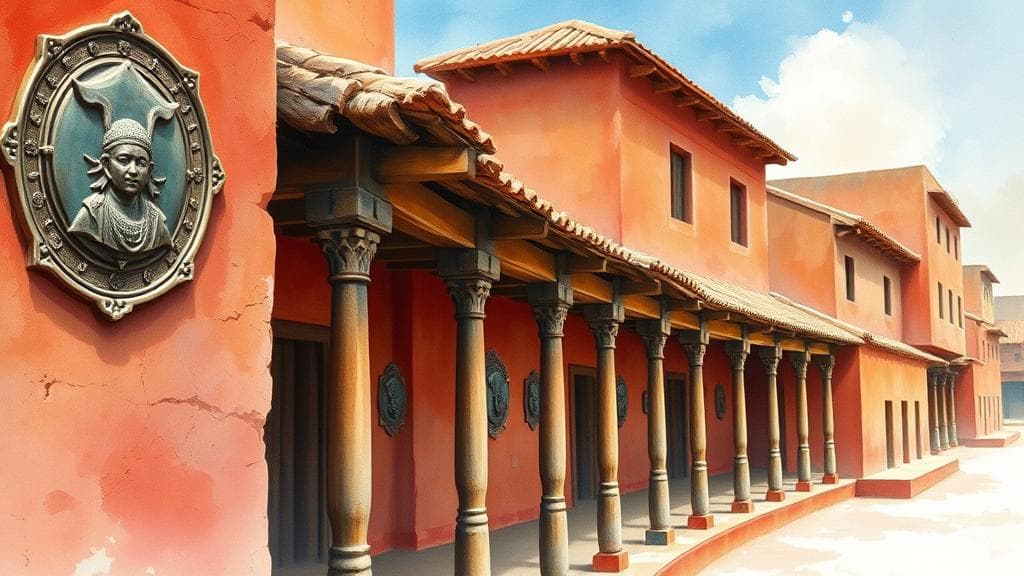
Nigerian artist and filmmaker Malik Afegbua is leveraging artificial intelligence to safeguard and reconstruct African history. Through his initiative, the Rememory project, Afegbua aims to recreate lost heritage sites across the continent, such as the historical Benin City. Located in modern-day Nigeria, Benin City served as the capital of the Kingdom of Benin, which flourished from the thirteenth to the nineteenth centuries before British forces destroyed it and looted its treasures in 1897. Today, only remnants of the original city survive in the modern metropolis, making digital reconstruction a vital tool for historical preservation. This technological push aligns with broader global interests, as institutions like the World Bank Group list digital and artificial intelligence among their key development priorities for Nigeria.
Security Challenges and National Sovereignty
While digital innovation offers new ways to archive the past, Nigeria continues to grapple with pressing security concerns. President Bola Tinubu recently addressed the nation on Democracy Day, marking the return to civilian rule in 1999, with a stern warning to armed groups to surrender or face the full force of the state. These security trials were recently highlighted by the death of retired Major General Rabe Abubakar, who died in captivity after being kidnapped. Additionally, military efforts continue on the ground, with hundreds of captives, including many women and children abducted near the Cameroon border in March, recently freed from a Boko Haram mountain hideout. In the judicial sector, a Nigerian court sentenced four individuals to death for their roles in a fatal attack on worshippers at a Catholic church, while a fifth defendant was acquitted due to insufficient evidence.
Diplomatic Relations and Cultural Footprints
On the international stage, Nigeria is managing complex diplomatic situations, notably initiating the evacuation of its citizens from South Africa. This repatriation effort follows a rise in anti-migrant sentiment and xenophobic protests, where groups warned undocumented residents to leave. Beyond diplomacy, Nigerian figures continue to make significant waves in sports and global culture. In athletics, Portuguese football star Cristiano Ronaldo missed key opportunities during a World Cup warmup match where Portugal defeated Nigeria. In the arts, musician Tiwa Savage announced a partnership with the Berklee College of Music to train one hundred emerging musicians, composers, and production talents. Meanwhile, British boxer Anthony Joshua was involved in a car crash in Ogun State, sustaining minor injuries that required hospital treatment.
Environmental Accountability and Scientific Research
Nigeria's domestic landscape also faces environmental and ecological scrutiny. Documents reveal that Shell continued to pump oil through a pipeline in the Niger Delta for years despite possessing evidence of pollution. This ongoing environmental degradation stands in contrast to local conservation efforts, such as those led by ecologist Iroro Tanshi, who has been documenting biodiversity, including the short-tailed round leaf bat in Cross River State. At the same time, even the digital documentation of Nigeria's history faces modern challenges; online platforms like Wikipedia have flagged entries on the history of Nigeria for potentially incorporating unauthorized text from large language models, highlighting the complex relationship between automated technology and factual historical records.
What this means for Africa: As Nigeria navigates critical security, environmental, and diplomatic challenges, local creators and international institutions are increasingly turning to digital technologies and artificial intelligence to preserve cultural heritage and drive economic development.
This digest was compiled from:
Share this digest
People Also Ask
- MarkHack 5.0 Launches in Lagos to Address AI Personalisation and the Culture Algorithm
MarkHack 5.0 will gather African innovators in Lagos to explore how artificial intelligence and data-driven systems shape modern consumer experiences.
- Nobel-Winning Economist Daron Acemoglu Shares His AI Concerns
Nobel-winning economist Daron Acemoglu highlights AI agents' limitations and the industry's push to shape the economic narrative around job concerns.
- The Rise of the Silicon Savannah: How Africa is Redefining the Global Outsourcing Market
Africa is emerging as a global outsourcing powerhouse, with seven countries ranking in the top 25 of the Ataraxis Global Outsourcing Talent Index.