Industry6 June 20265 min readAI Generated
Inside MTN’s "Data on Trial": What the Battle Over MTN data depletion Nigeria Means for App Builders
Why MTN data depletion Nigeria matters for local builders
For any software engineer in Yaba, product manager in Accra, or startup founder in Nairobi, mobile data is not just a consumer utility—it is the digital runway for your entire product. When the market is gripped by widespread anxiety over **MTN data depletion Nigeria**, it directly threatens the viability of modern, data-rich applications. If consumers believe their network operators are unfairly draining their data balances, their immediate defensive reaction is to throttle their own digital experiences. They disable background data, turn off auto-updates, avoid video features, and uninstall high-performance apps. For African builders trying to deploy sophisticated, interactive software or localized AI agents, this defensive consumer behavior severely shrinks the addressable market. We cannot ignore the economic reality of the West African consumer. Bandwidth is priced in local currencies that have faced severe inflationary pressures, making every gigabyte a calculated investment for the average user. If a subscriber feels that a simple scroll on a social media app or a quick session on a newly launched local fintech tool is aggressively depleting their wallet, they will churn. The debate around **MTN data depletion Nigeria** is not merely a public relations headache for a telecommunications giant; it is a structural barrier to digital product adoption across the continent. To build successful software in this environment, founders must understand the technical and operational realities of how data is metered, billed, and consumed on the ground.What happened: Public scrutiny over MTN data depletion Nigeria
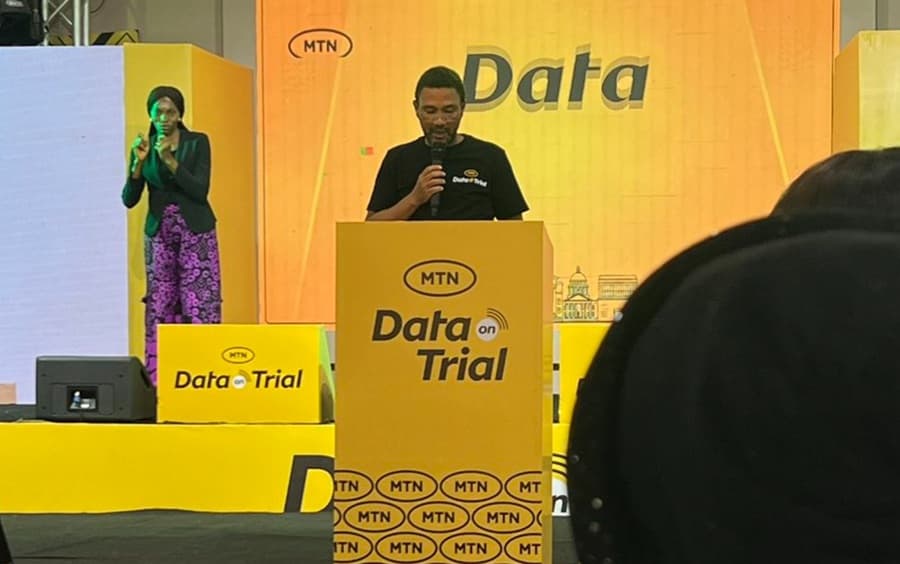
In a direct response to intensifying consumer backlash, MTN Nigeria recently took the unprecedented step of opening its data billing and network operations to independent public scrutiny. Hosting a live-streamed public engagement in Lagos under the banner of "Data on Trial," the telecom giant sought to demystify its billing infrastructure and rebuild eroded customer trust. Tobe Okigbo, MTN’s Chief Corporate Services and Sustainability Officer, framed this move as an open invitation to the ecosystem. "We want Nigerians to tell us what is wrong, ask questions and help us identify issues so that we can collectively find solutions," Okigbo stated, drawing parallels to a previous crisis where MTN suspended value-added services to address unauthorized deductions and restore confidence. The technical defense of the operator was led by Michael Ndukwe, MTN’s General Manager of Network Quality. Dismantling the prevailing public narrative of arbitrary deductions, Ndukwe walked attendees through the granular mechanics of modern packet-switched networks. "We usually hear the concern that MTN is stealing my data. I’m here to take you step by step through exactly how your data is used," Ndukwe explained. Using TikTok as a prime example, he clarified that data consumption only starts when a user requests content, which is then transmitted in packets and reassembled on the device. "Data is not taken from you without your action. When you stream, scroll, download or share, you are using data. It’s as simple as that," he added. MTN’s IT and network engineering teams also addressed the persistent discrepancies between what a user’s phone reports and what the network bills. David Ogunshola of MTN’s IT department explained that mobile devices typically track only application-level consumption. In contrast, the network records the entire session, including the signaling overhead required to establish and maintain connectivity. Meanwhile, Asura Mshelia, General Manager of Network Services, highlighted the physical vulnerabilities of the network, noting that power failures, equipment faults, and rampant vandalism—including the theft of generators, batteries, and solar panels—frequently disrupt service delivery and force traffic through congested backup routes.MTN data depletion Nigeria and the bigger picture for Africa
The friction surrounding **MTN data depletion Nigeria** exposes a fundamental mismatch between modern high-speed infrastructure and the economic constraints of the African consumer. The transition to 4G and 5G networks has drastically improved latency and throughput, but it has also fundamentally altered how data is consumed. As Ndukwe pointed out, faster networks naturally deliver higher-quality, richer media assets. A video that would have buffered or scaled down to standard resolution on a 3G network now plays instantly in crisp high-definition on 5G. This seamless user experience comes at a steep cost: high-definition streaming consumes several times more data packets than standard-definition alternatives. For African developers, this reality demands a shift in engineering philosophy. We cannot build products with the assumption of cheap, unmetered bandwidth typical of Western or East Asian markets. The physical infrastructure on the continent is under constant strain. With MTN recording hundreds of attacks on its telecom infrastructure and frequent fiber cuts caused by road construction or sabotage, network quality is highly variable. When connection quality drops, retransmission of lost packets occurs, which can further inflate data usage metrics on the network side. This means that optimization is not a luxury; it is a core feature. If your application does not feature aggressive caching, image compression, and low-bandwidth fallback modes, you are actively pricing your users out of your product.What's next for MTN data depletion Nigeria and digital businesses
Looking ahead, the resolution of the **MTN data depletion Nigeria** crisis will depend heavily on regulatory transparency and developer adaptability. MTN has stated that its billing processes remain subject to periodic, rigorous audits by the Nigerian Communications Commission (NCC) and independent international assessors, utilizing the same charging standards deployed in highly regulated global markets. However, building trust requires ongoing public engagement and clearer visual tools on consumer devices to align device-level tracking with network-level billing. For local builders and startup founders, the immediate action item is clear: design for data efficiency. This means integrating data-saver toggles directly into your application interfaces, minimizing background synchronization, and being transparent with users about how much data your services consume. As the ecosystem matures, the companies that win will not just be those with the most innovative algorithms, but those that respect the consumer's wallet by delivering maximum value per megabyte.Bottom line for African builders: Stop building bandwidth-heavy applications; optimize your code for packet efficiency and local infrastructure constraints to prevent consumer churn in a highly price-sensitive market.
#industry#ai#digest#auto
This digest was compiled from:
- https://techeconomy.ng/data-on-trial-mtn-explains-how-streaming-auto-play-hotspot-sharing-features-cause-data-depletion/
- https://theeagleonline.com.ng/mtn-opens-data-billing-systems-to-public-scrutiny-amid-concerns/
- https://aiinnigeria.com/adapting-ai-for-nigeria/
- https://techeconomy.ng/abbey-mortgage-bank-acquires-banking-licence/
- https://techeconomy.ng/nitda-endorses-niras-2026-expansion-plan-for-ng-adoption/
Share this digest
People Also Ask
- MarkHack 5.0 Launches in Lagos to Address AI Personalisation and the Culture Algorithm
MarkHack 5.0 will gather African innovators in Lagos to explore how artificial intelligence and data-driven systems shape modern consumer experiences.
- Nobel-Winning Economist Daron Acemoglu Shares His AI Concerns
Nobel-winning economist Daron Acemoglu highlights AI agents' limitations and the industry's push to shape the economic narrative around job concerns.
- The Rise of the Silicon Savannah: How Africa is Redefining the Global Outsourcing Market
Africa is emerging as a global outsourcing powerhouse, with seven countries ranking in the top 25 of the Ataraxis Global Outsourcing Talent Index.