Industry9 June 20265 min readAI Generated
CreditChek alternative credit data gets $600,000 boost for East African expansion
Why CreditChek alternative credit data matters for Nigeria/Africa
Lending in Africa is a high-stakes gamble masquerading as financial engineering. For years, digital lenders on the continent have operated in a data vacuum, relying on surface-level metrics that fail to capture the true cash-flow realities of the informal economy. When you cannot verify a borrower's real income, you either price risk out of reach with predatory interest rates or watch your balance sheet dissolve into bad loans. This is why **CreditChek alternative credit data** represents a structural shift for African fintech. The traditional credit bureau model is fundamentally broken in markets where the vast majority of economic activity happens outside formal employment structures. A market trader, a smallholder farmer, or a freelance software developer does not have a conventional credit history, but they have vibrant, active cash flows. By turning unstructured bank statements and transactional histories into actionable risk profiles, alternative data infrastructure transforms lending from a speculative venture into a precise science. It directly bridges the massive $330 billion MSME financing gap by giving lenders the confidence to deploy capital safely.What happened: CreditChek alternative credit data expands Eastward
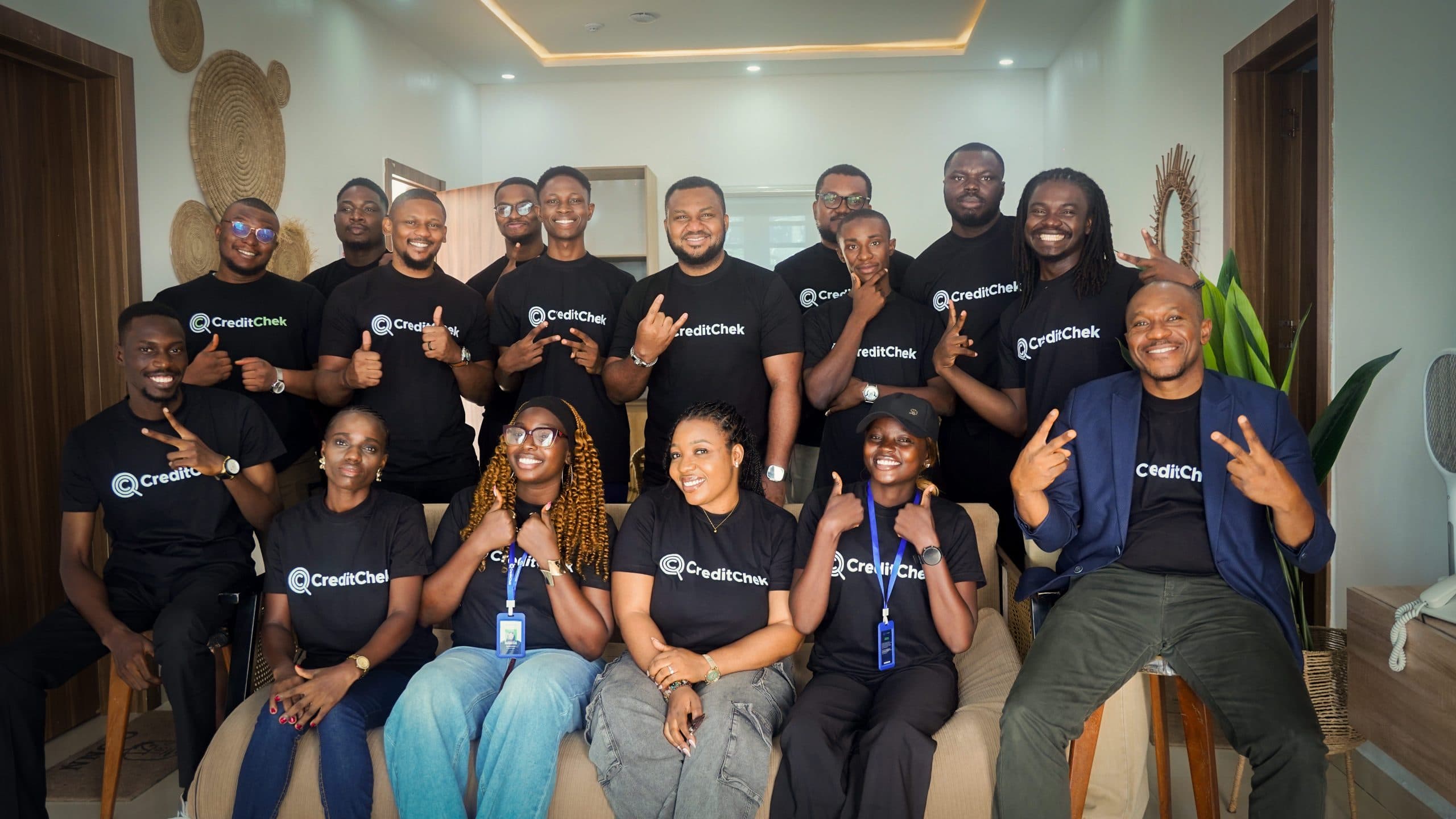
Lagos-based financial intelligence startup CreditChek has secured $600,000 in pre-expansion funding to scale its data infrastructure into East Africa, targeting Kenya, Uganda, and Rwanda. The funding round was led by Janngo Capital, with participation from existing backer Assembly Investors and new investors Vastly Valuable Ventures and Unipeg Capital. Launched in 2022 by Kingsley Ibe and Lionel Orishane, the company has built an API-first platform that aggregates data from financial institutions, credit bureaus, and alternative data providers. Its flagship AI-powered tool, **Income Insight**, analyzes bank statements to verify income and understand cash-flow patterns of borrowers, estimating their actual capacity to repay. According to the company, loans underwritten using its data infrastructure have recorded more than 75% lower **delinquency rates** compared to traditional underwriting methods. "We’re building the data infrastructure that allows lenders to access richer, more reliable insights," said Kingsley Ibe, co-founder and chief executive of CreditChek. "This funding allows us to scale our infrastructure and partnerships in East Africa, bringing us closer to a future where credit decisions are faster, more inclusive, and more reliable." The company’s growth metrics justify its expansion ambitions. CreditChek processed more than $60 million in credit applications across one million unique customer profiles in 2025 and is already profitable in Nigeria. This capital injection will allow it to integrate its data pipelines across East Africa's rapidly growing digital lending ecosystems. "We are proud to lead this funding round in CreditChek, a company building the credit data infrastructure Africa needs to scale responsible lending," said Fatoumata Bâ, Founder and Executive Chair of Janngo Capital. "By enabling lenders to make better decisions using alternative data, the company is helping expand access to financing for millions of underserved individuals and businesses while addressing Africa’s estimated $331 billion MSME financing gap."CreditChek alternative credit data and the bigger picture for Africa
The expansion of CreditChek alternative credit data into East Africa highlights a broader continental trend: the convergence of regional fintech ecosystems. Kenya, Uganda, and Rwanda are not just random expansion targets; they represent high-velocity digital transaction hubs. Kenya’s licensed Digital Credit Providers (DCPs) disbursed 7.5 million loans valued at KES133.5 billion ($1 billion) as of February 2026. Uganda’s mobile money payments have grown at an average annual rate of 25% since the 2020/2021 financial year, while Rwanda’s financial inclusion rate reached 96% in 2024. Yet, despite this massive transaction volume, interoperable credit data remains a critical bottleneck. Lenders across the continent struggle to access dependable, unified credit profiles, keeping underwriting costs high and credit access restricted. By packaging cross-border credit history through its Credit Insight tool, CreditChek is addressing a major pain point for financial institutions looking to scale beyond their home markets. Building an API-first credit infrastructure across multiple regulatory jurisdictions is an incredibly complex task. Each African nation has its own data protection laws, such as Nigeria's NDPA and Kenya's Data Protection Act. To succeed, alternative credit data providers must navigate these localized legal frameworks while maintaining seamless, real-time API integrations. The fact that CreditChek is already profitable in its home market of Nigeria proves that the unit economics of data aggregation can work if scaled correctly.What's next for CreditChek alternative credit data in Nigeria/Africa
For African software engineers and fintech founders, the proliferation of CreditChek alternative credit data opens up a new playground for product design. You no longer have to build your own proprietary risk engines from scratch. Instead, you can plug directly into pre-verified credit intelligence APIs, drastically lowering the barrier to entry for launching niche credit products—whether that is device financing, solar energy subscriptions, or inventory credit for retail merchants. In Nigeria, CreditChek's partnership with Bboxx under the Distributed Access through Renewable Energy Scale-up (DARES) project shows where this is going. By using alternative data to underwrite solar financing for 17 million rural households, they are proving that credit infrastructure is the ultimate enabler for real-world utility. Expect to see similar partnerships scale across East Africa as CreditChek integrates with local telcos, mobile money operators, and microfinance institutions in Nairobi and Kigali. Watch closely how traditional credit bureaus react to this expansion. They will either be forced to acquire these nimble, API-first startups or risk becoming completely obsolete as digital-first lenders bypass them entirely.Bottom line for African builders: Stop building proprietary underwriting silos and start leveraging API-first alternative credit data to scale your financial products across regional borders safely.
#industry#ai#digest#auto
This digest was compiled from:
Share this digest
People Also Ask
- MarkHack 5.0 Launches in Lagos to Address AI Personalisation and the Culture Algorithm
MarkHack 5.0 will gather African innovators in Lagos to explore how artificial intelligence and data-driven systems shape modern consumer experiences.
- Nobel-Winning Economist Daron Acemoglu Shares His AI Concerns
Nobel-winning economist Daron Acemoglu highlights AI agents' limitations and the industry's push to shape the economic narrative around job concerns.
- The Rise of the Silicon Savannah: How Africa is Redefining the Global Outsourcing Market
Africa is emerging as a global outsourcing powerhouse, with seven countries ranking in the top 25 of the Ataraxis Global Outsourcing Talent Index.