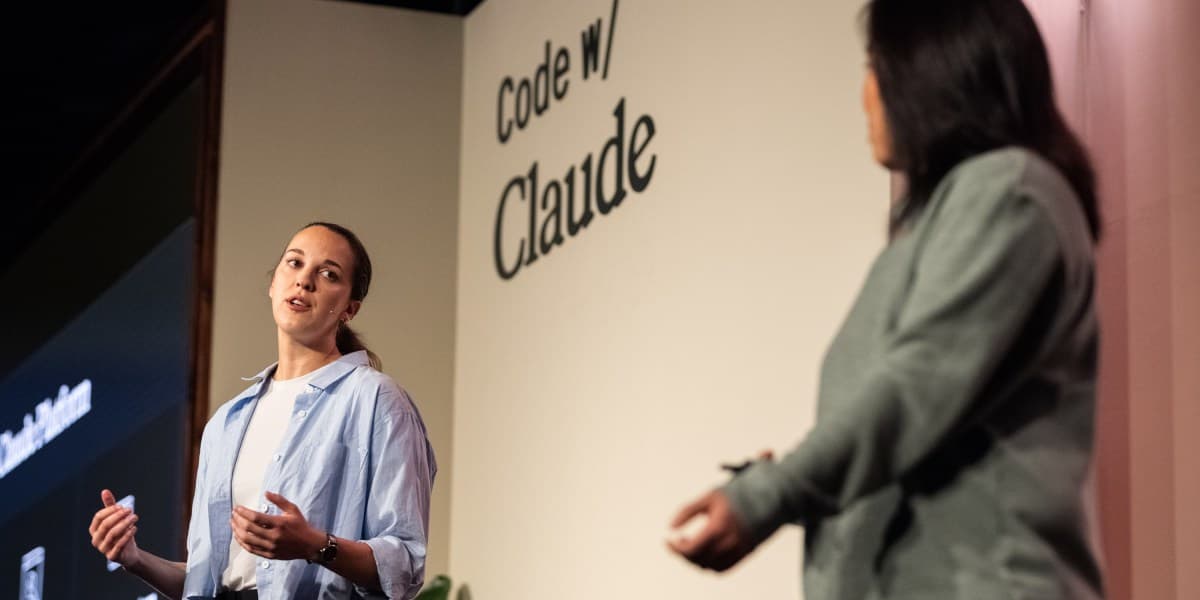
How Anthropic's Code with Claude Showed Off the Future of Software Development
A New Paradigm for Software Development
At Anthropic's two-day Code with Claude event in London, which kicked off on May 19, the rapid shift in how software is built was on full display. During a presentation, Anthropic engineer Jeremy Hadfield asked the packed room of software developers how many had shipped a pull request in the past week completely written by Claude. Nearly half of the attendees raised their hands. When he followed up by asking how many had shipped a pull request completely written by Claude without even reading the code, most of those hands stayed up.
This shift highlights how quickly AI-powered coding has become normalized. According to Hadfield, most software at Anthropic is now written by Claude, and the AI has even written most of the code within Claude Code itself. With the release of updates like Claude 4.6 in February and Claude 4.7 in April, developers are increasingly comfortable handing their core tasks over to the tool.
Letting Claude Cook and Prompt Itself
Anthropic is pushing automation further by designing systems where Claude can check and correct its own work without human intervention. Boris Cherny, who heads Claude Code, explained during his keynote that the default workflow has shifted from a human prompting Claude to Claude prompting itself. The goal is for the AI to test, tweak, and resolve error messages internally so that human developers do not even have to see them.
To support this hands-off approach, Anthropic engineer Ravi Trivedi emphasized the principle of getting out of the AI's way, summarizing it with the phrase, "Let it cook." Trivedi highlighted a new feature within Claude Managed Agents called dreaming. This cloud-based setup allows coding agents to write notes to themselves about specific tasks. Through dreaming, agents read and consolidate these notes to spot patterns and common issues, helping them learn and improve their work on a specific code base.
Industry Adoption and Success Stories
The event showcased how various companies are restructuring their development teams around Claude Code. Representatives from companies like Spotify and Delivery Hero, alongside startups like Lovable, Base44, and Monday.com, shared how they are utilizing the tool to transform their software development workflows.
This digest was compiled from:
Share this digest
People Also Ask
- The Human Side of Claude: How Anthropic is Addressing Global User Needs, AI Sycophancy, and Recruitment Ethics
Anthropic's global study reveals how users, including Nigerian entrepreneurs, seek personal guidance from Claude, prompting new safety and model training updates.
- Why Anthropic’s AI-powered Vulnerability Discovery Framework is a Game-Changer for African Fintech Security
Anthropic’s open-source framework for AI-powered vulnerability discovery democratizes cybersecurity, allowing resource-constrained African startups to automate code defense and protect critical digital infrastructure.
- Anthropic's Latest: Claude Levels Up for Builders
Anthropic's latest moves position Claude as a powerful, ethical, and enterprise-ready AI partner for African builders.